For years, the assumption in Bloomingdale, Providence Lakes, and Heather Lakes was simple: if the roof isn't leaking, insurance is a formality you deal with after the inspection period closes. That assumption stopped being safe on July 1, 2026, when Florida's newest roof-age insurance rules took effect. The law itself is friendlier to homeowners than what came before it. The problem is what it does to the calendar between the day a Brandon seller accepts an offer and the day the deal actually closes.
Here's the mechanism nobody prices in: a roof's age doesn't move overnight, but a home's insurability status can shift mid-transaction if nobody checks it early. A house that looked fully insurable on the day you signed the contract can turn into a financing scramble thirty or forty-five days later, right when a rate lock is tightening and a closing date is already printed on the settlement statement.
What Actually Changed on July 1
Senate Bill 808 and House Bill 815, both effective this summer, reinforced a rule that already existed in Florida Statute 627.7011 and gave it more teeth. Under the statute, an insurer cannot deny or non-renew a homeowners policy solely because a roof is under 15 years old. That protection was already law before this year, but the 2026 legislation expanded who is authorized to perform the inspection that keeps coverage alive once a roof crosses that 15-year line, adding licensed home inspectors to the list alongside roofers and engineers.
Once a roof passes 15 years, the statute doesn't automatically cut off coverage. It allows the homeowner to get a certified inspection showing the roof has at least five more years of useful life, and a carrier that receives that certification can't deny the policy on age alone. The practical effect is that a 16-year-old roof and a 24-year-old roof are treated very differently by the same law: one is likely fine with paperwork, the other is standing at the edge of what the market will still write.
That edge has a name in the industry. Citizens Property Insurance Corporation, Florida's insurer of last resort, generally sets its own ceiling at 25 years for shingle roofs and extends further, to roughly 50 years, for tile, slate, concrete, and metal. Past those marks, even the backstop insurer starts to look unavailable, and Citizens has been shrinking all year as the state moves policies back into the private market, meaning there are fewer places left to land if a private carrier passes on an aging roof.
The Age Brackets That Actually Drive a Brandon Closing
| Roof Age | What the Law Says | What It Means at Contract |
|---|---|---|
| Under 15 years | Protected. Age alone cannot trigger denial or non-renewal. | Insurance is close to a formality. Quote it anyway, don't assume. |
| 15 to 25 years | Carrier can require an inspection. A certified 5-year remaining-life report keeps coverage alive. | This is where deals stall if the inspection wasn't ordered before the offer was written. |
| Past 25 years (shingle) | Private markets thin out. Citizens becomes the likely option, if it will write the policy at all. | Sellers should expect buyer financing to take longer, and price accordingly. |
The number that resets this whole clock is the date of the last full, permitted roof replacement, not the date of a patch job after a storm. A partial re-roof or a handful of replaced shingles doesn't restart the age calculation. Only a documented, code-compliant full replacement does. That single fact catches sellers off guard more than any other part of this law, because plenty of Brandon homes have had storm repairs over the years that homeowners assumed reset the age on file.
Why This Lands Hardest in Bloomingdale, Providence, and Heather Lakes
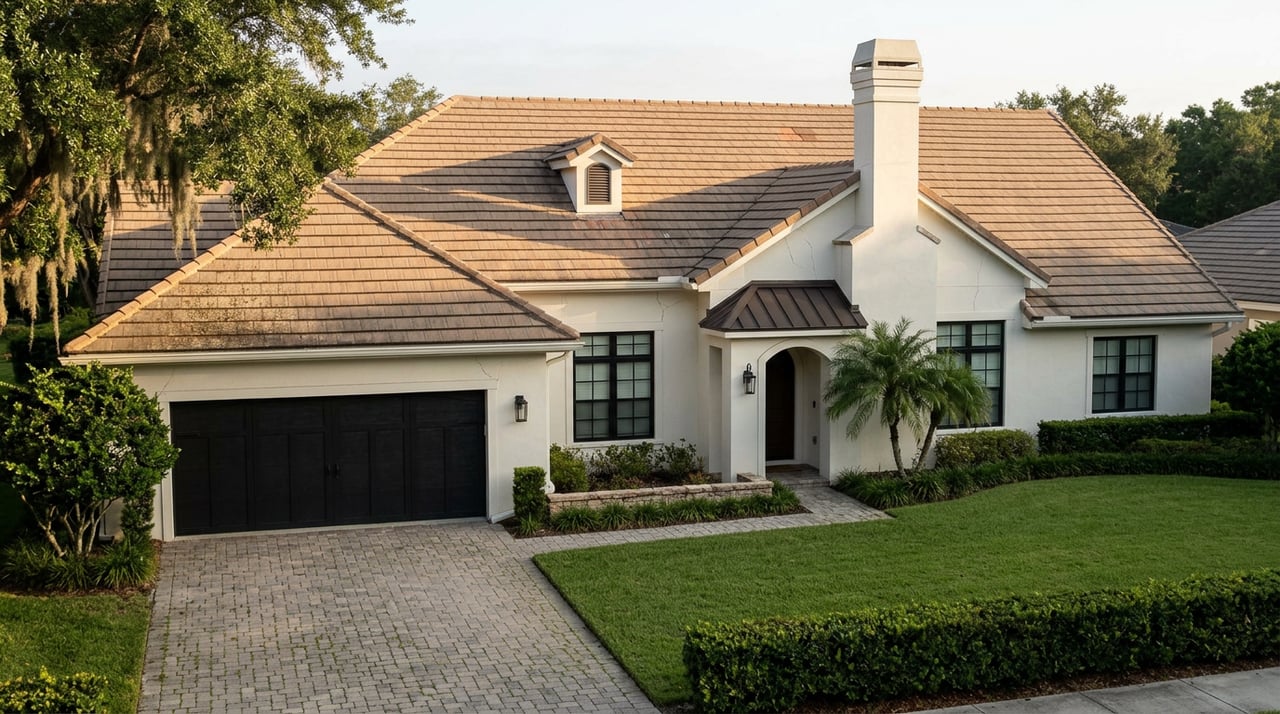
Brandon's housing stock didn't age evenly. The newer pockets around South Ridge and Brandon Trace are still comfortably inside the 15-year protected zone. But the established, golf-oriented streets of Bloomingdale, the mid-sized master-planned sections of Providence Lakes and Heather Lakes, and the larger, longer-standing lots around Buckhorn and Buckhorn Estates were largely built out in the late 1990s and 2000s. That puts a meaningful share of original roofs in those communities somewhere between 20 and 30 years old right now, sitting squarely in the inspection zone or approaching the Citizens ceiling.
None of this means those homes are less desirable. It means the insurance conversation has to happen earlier in the process than it used to, because the neighborhoods with the steadiest resale activity in Brandon are also the ones where a roof's age is now doing real work in the underwriting file.
The Calendar Gap Nobody Prices In
Here's the scenario playing out across these subdivisions this fall. A seller lists a well-maintained Bloomingdale home with a 22-year-old shingle roof that has never given anyone trouble. A buyer, eager to win the house in a competitive round of offers, waives the roof inspection contingency to make the bid more attractive. The appraisal comes in fine. The buyer's lender orders insurance quotes during underwriting, not before the offer, and the private carrier they expected to use won't bind a policy on a roof this old without the certified remaining-useful-life report the statute requires. Getting that report takes a licensed inspector, a scheduling window, and time the closing date doesn't have. The buyer either scrambles to Citizens at a higher premium with less favorable terms, or the whole financing timeline slips past the rate lock expiration.
None of that is a defect in the house. It's a sequencing problem, and it is entirely avoidable if the roof's age and insurability get checked before the contract is signed rather than during the underwriting sprint that follows it.
What Actually Protects You Before You're Under Contract
For sellers in Brandon's older subdivisions, the move is to get ahead of the question rather than wait for a buyer's lender to raise it. Pull the permit history to confirm the last full roof replacement date. If the roof is past 15 years, consider ordering a wind mitigation and remaining-useful-life inspection before listing, so the certification is already in hand when an offer comes in instead of becoming a mid-contract fire drill.
For buyers, the discipline runs the other direction. Get insurance quotes on a specific property before writing the offer, not after. Ask for the seller's permit records rather than taking a verbal estimate of the roof's age. And resist waiving the roof inspection contingency purely to make a bid stand out in a multiple-offer situation, especially on anything built before the early 2000s. A roof inspection contingency is one of the few tools that catches this problem while there's still time to solve it.
A Few Direct Questions
Does a partial re-roof or storm patch reset the insurance age clock? No. Only a full, permitted roof replacement resets the age used for underwriting. Repairs, even significant ones, don't count.
Can a 20-year-old roof still get coverage? Often yes, but it usually requires a certified inspection showing at least five years of remaining useful life under Florida Statute 627.7011. Without that documentation, private carriers may decline and Citizens becomes the more likely path.
Is Citizens Property Insurance still available in Brandon? Generally yes, though its policy count has fallen sharply through 2026 as the state moves coverage back into the private market. Citizens is not necessarily the cheaper option, and it comes with assessment risk homeowners should understand before treating it as a fallback plan.
Whether you're listing a longtime home in Bloomingdale or writing an offer in Providence Lakes, the roof conversation now belongs at the start of the transaction, not somewhere in the middle of underwriting. If you want a clear read on where your specific property sits against these thresholds, or you're weighing whether now is the right time to list, Engel & Völkers Lakeland - Lisa Matheny can walk through the timing with you and connect you with the inspection and insurance partners who know this market. Start with a free home valuation or take a look at the seller's guide for the fuller picture before you list.